
Satisfies 1 requirement
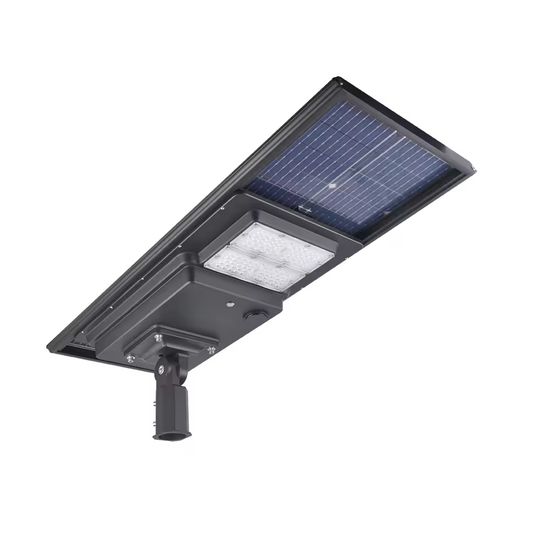
1000W Outdoor Camping Garden Waterproof LED Remote Control Sensor Street Road Wall Energy Saving Solar Powered Flood Street Lamp
US$5.00-23.00
1 Piece(MOQ)

I have found results from90000+products and30000+suppliers aboutSolar led street lamp




Selecting the appropriate lamp depends heavily on the installation height and pole spacing. For residential roads (3-5m height), a 20W-40W LED power is sufficient. For main highways (8-12m height), you should prioritize high-lumen output (150lm/W or higher) and a power rating of 80W-120W. Always verify the IP65 or IP67 waterproof rating to ensure durability against heavy rain and dust. Additionally, consider the working temperature range, especially if the installation site experiences extreme heat or freezing winters, as this affects battery efficiency.
The core of a solar lamp is its energy storage. You should insist on LiFePO4 (Lithium Iron Phosphate) batteries, which offer over 2,000 charge cycles and better thermal stability compared to traditional ternary lithium batteries. For the solar panels, Monocrystalline Silicon is preferred over Polycrystalline due to its higher conversion efficiency (20%+), allowing for faster charging even on cloudy days. Ensure the battery capacity is large enough to support at least 3-5 consecutive rainy days of lighting (autonomy days).
To ensure market entry and safety, products must carry CE, RoHS, and FCC certifications. For specific markets like the EU, LVD and EMC reports are mandatory. If the project is government-funded, look for IES files (photometric data) to prove light distribution accuracy and LM-80 reports for LED chip longevity. Buyers should also check for ISO 9001 factory certification to ensure consistent manufacturing quality.
Modern B2B buyers should look for lamps equipped with MPPT (Maximum Power Point Tracking) controllers, which increase charging efficiency by 15-30% compared to PWM controllers. Features like PIR motion sensors or microwave induction can significantly extend battery life by dimming the light when no motion is detected. For smart city projects, verify if the lamps support IoT remote monitoring (Zigbee/LoRa/4G) to track battery health and light status in real-time.
The biggest risk involves the transportation of lithium batteries, which are classified as Class 9 Dangerous Goods. You must ensure the supplier provides a valid UN38.3 test report and MSDS (Material Safety Data Sheet). Failure to provide these will lead to customs seizures or rejection by shipping lines. Additionally, because solar panels are fragile, specify reinforced packaging with wooden crates or pallets to prevent micro-cracks during transit.
When negotiating, do not just focus on the unit price; focus on the Total Cost of Ownership (TCO). Ask for a breakdown of component brands (e.g., Bridgelux chips, Philips drivers) to justify the cost. Request a tiered pricing structure where the price drops by 5-10% for container-level orders. For long-term partnerships, negotiate a 2-5 year warranty period and ask the supplier to include 2% extra spare parts (controllers or LED modules) for free to handle local maintenance.
Always use secure payment methods and consider using the inspection services offered through Made-in-China.com to verify the goods before they leave the factory. Conduct a third-party factory audit if the order value is high. Ensure the Proforma Invoice (PI) clearly states the technical specifications, including battery chemistry, panel wattage, and lumen output, to provide legal recourse in case of quality disputes.
Be aware of Anti-Dumping Duties (ADD) that some regions (like the EU or USA) may impose on solar panels originating from specific countries. Check your local Harmonized System (HS) Code (typically 940541) to calculate accurate import duties. Some countries offer tax incentives or subsidies for renewable energy products, so ensure your documentation is complete to help your end-customers claim these benefits.