
Satisfies 1 requirement
60W DC/AC Power Hybrid Street Light 12 Hours Outdoor IP65 Road Highways RoHS CCC Full Bright Wind Solar Street Light
US$24.00-28.00
2 Pieces(MOQ)

I have found results from10000+products and4000+suppliers aboutSolar hybrid street light


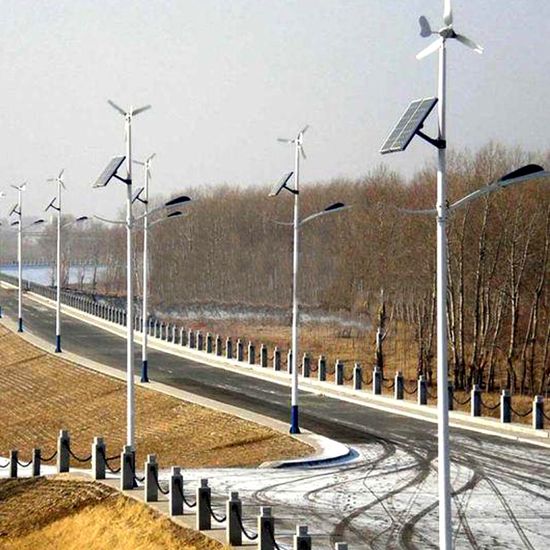


Buyers should prioritize high-efficiency monocrystalline silicon solar panels (conversion rate >21%) and LiFePO4 (Lithium Iron Phosphate) batteries, which offer a longer cycle life (up to 2000+ cycles) compared to lead-acid alternatives. Ensure the LED luminous efficacy is at least 150lm/W to maximize brightness while minimizing power consumption. Additionally, verify the IP65 or IP66 waterproof rating to ensure durability against harsh weather conditions.
A hybrid system integrates solar energy with AC grid power. The intelligent controller prioritizes solar energy; however, if the battery voltage drops below a certain threshold due to prolonged rainy days, the system automatically switches to grid power. This ensures 100% lighting reliability throughout the year, making it ideal for critical infrastructure and urban roads where safety is paramount.
For the European market, CE, RoHS, and EN 60598 certifications are essential. For the North American market, look for UL or ETL listing and FCC compliance. Since these products are used outdoors, IK08 or higher impact resistance certification is recommended to prove the light can withstand physical vandalism or falling debris. Always request IES files to verify light distribution and photometric performance.
While the initial investment is higher than traditional lights, the ROI is typically achieved within 2-3 years through zero electricity bills (during sunny periods) and reduced cabling costs. Buyers should calculate the Total Cost of Ownership (TCO), including the savings from not needing deep trenches for long-distance wiring, which is often the most expensive part of traditional street lighting projects.
The primary risk involves the transportation of Lithium batteries, which are classified as Class 9 Dangerous Goods. Ensure the supplier provides a valid UN38.3 test report and MSDS (Material Safety Data Sheet). Failure to provide these will lead to customs seizures or refusal by shipping lines. Furthermore, ensure the solar panels are packed with reinforced wooden crates to prevent micro-cracks during sea transit.
Always request a Gold Member supplier with a verified factory audit report. Negotiate a milestone-based payment schedule, such as 30% deposit, 40% after production (verified by video inspection), and 30% after third-party pre-shipment inspection (PSI). Explicitly define the warranty terms (typically 3-5 years) and specify that the supplier must provide 2% spare parts (controllers and LED modules) with the bulk order.
Use Secured Trading services provided by Made-in-China.com to protect your funds. Never transfer money to personal bank accounts; always ensure the beneficiary name matches the company name on the business license. For large-scale government tenders, consider using a Letter of Credit (L/C) to mitigate payment risks for both parties.
Be aware of Anti-Dumping Duties (ADD) and Countervailing Duties (CVD) that some regions (like the EU or USA) impose on solar cells originating from specific countries. Check your local Harmonized System (HS) Code (typically 940541) to determine the exact import duty rates and see if there are green energy subsidies or tax incentives available in your country for importing renewable energy products.