
Satisfies 1 requirement
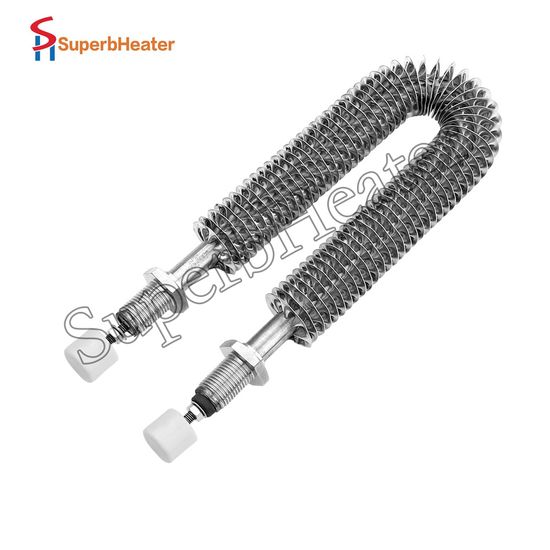
Tzcx Brand Customized Electric Tubular Fin Heating Element Air Finned Heater
US$23.00-35.00
1 pieces(MOQ)

I have found results from20000+products and10000+suppliers aboutTubular air heater




When sourcing tubular air heaters, you must prioritize watt density, sheath material, and fin configuration. For forced air heating, a stainless steel (304, 316L, or 321) or Incoloy sheath is essential to prevent oxidation at high temperatures. Ensure the watt density does not exceed 25-30 W/in² for stagnant air to prevent premature element burnout. Additionally, verify the insulation resistance (typically >1000MΩ) and dielectric strength to ensure operational safety under high-voltage conditions.
To ensure market entry and safety, products should ideally carry CE marking for the European market and UL or CSA certification for North America. Since these are electrical components, compliance with the RoHS Directive (Restriction of Hazardous Substances) is mandatory to ensure the absence of lead and mercury. For specialized environments, check for ATEX or IECEx certification if the heater is intended for use in explosive atmospheres.
Finned tubular heaters are superior for air heating applications because the fins increase the surface area, allowing for faster heat dissipation and higher wattage in a compact space. This results in lower sheath temperatures and a longer lifespan for the element. Plain tubular heaters are generally reserved for radiant heating or liquid immersion where surface buildup (fouling) might be a concern, as fins can trap dust and particles in high-airflow industrial ducts.
A high-quality supplier on Made-in-China.com should offer customization in bending shapes (U-shape, W-shape, or complex coils) to fit specific duct dimensions. You should also request custom cold sections (non-heating ends) to ensure the heat is only generated where needed, protecting terminals and wiring from melting. Ask for integrated thermocouple sensors (Type K or J) within the sheath for precise temperature control and over-temperature protection.
Always request a pre-shipment inspection (PSI) and a material mill test report. The most common risk in this category is the use of low-grade resistance wire (e.g., substituting NiCr 80/20 with cheaper alloys). Use Made-in-China.com's Secured Trading services to ensure payment is only released after the quality is verified. Additionally, ask for a 100% Hi-Pot (High Potential) test report for every unit in the batch.
Focus on Total Cost of Ownership (TCO) rather than just the unit price. Negotiate based on warranty terms (aim for 12-24 months) and spare part inclusion (e.g., extra gaskets or mounting flanges). For bulk orders, leverage the MOQ (Minimum Order Quantity) to get a tiered discount; typically, orders exceeding 500 units can see a 15-20% price reduction compared to sample pricing.
Tubular heaters, especially long or finned ones, are prone to bending during transit. Insist on vacuum-sealed plastic wrapping to prevent moisture ingress into the MgO (Magnesium Oxide) insulation, followed by reinforced wooden crate packaging for LCL (Less than Container Load) shipments. Ensure the shipping documents include a HS Code 851680 (Electric heating resistors) to avoid customs delays and incorrect tariff applications.
Prioritize Audited Suppliers on Made-in-China.com who have undergone third-party verification by SGS or Bureau Veritas. Use Escrow-based payment methods and clearly define the Incoterms (e.g., FOB or CIF) in the Proforma Invoice. Avoid direct wire transfers to private accounts; always use the official corporate bank account listed on the supplier's verified profile.