
Satisfies 1 requirement
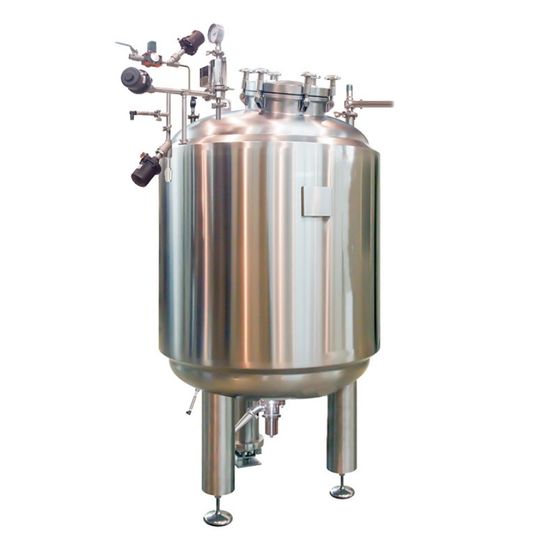
Chocolate Liquor Heat Preservation Storage Tank Volume 3000L
US$9,600.00-10,000.00
1 Piece(MOQ)

I have found results from100000+products and40000+suppliers aboutThermal heat tank




When evaluating a Thermal Heat Tank, you must prioritize material durability and insulation efficiency. Look for tanks constructed from SUS304 or SUS316L stainless steel to ensure corrosion resistance, especially for pressurized systems. The insulation layer should ideally be high-density polyurethane foam (50mm+ thickness) to minimize heat loss. Additionally, verify the rated pressure (typically 0.6MPa to 1.0MPa) and the heat exchange efficiency if the tank includes internal coils.
Compliance is critical for safety and legal importation. Ensure the supplier provides CE marking for the European market or UL certification for North America. For pressurized vessels, adherence to the ASME Boiler and Pressure Vessel Code or the PED (Pressure Equipment Directive) 2014/68/EU is essential. Furthermore, if the tank is used for potable water, verify WRAS or NSF/ANSI 61 certifications to ensure no harmful chemicals leach into the water supply.
Request the Standing Heat Loss data (measured in kWh/24h) to determine how well the tank retains temperature. For solar or heat pump integrated tanks, check the Coefficient of Performance (COP) compatibility. High-quality manufacturers on Made-in-China.com often provide third-party thermal imaging reports to prove there are no thermal bridges in the tank structure.
A capable supplier should offer OEM/ODM services, including adjustable port locations, custom storage capacities (ranging from 50L to 5000L+), and the ability to add electric backup heaters (1.5kW to 9kW). Ensure they can provide CAD drawings for approval before production to guarantee the tank fits your specific installation footprint.
The main risks are structural deformation and internal lining damage due to improper handling. You should mandate reinforced plywood crate packaging rather than simple palletizing. Ensure the contract includes a pre-shipment pressure leak test witnessed via video or a third-party inspector to avoid receiving defective units that are costly to return.
For industrial thermal tanks, MOQs are often flexible (starting at 1-5 units). To secure better pricing, propose a staggered purchasing plan rather than a one-off order. Negotiate based on raw material indices (like the LME nickel price for stainless steel) to ensure transparent pricing. Always use Made-in-China.com's secured payment services to protect your funds until the Bill of Lading is confirmed.
Due to the high volume-to-weight ratio, Sea Freight (FCL or LCL) is the most economical method. For large-scale projects, request FOB (Free On Board) terms to maintain control over your shipping costs and insurance. Ensure your customs broker confirms the HS Code (typically 7309.00 or 8419.19) to accurately calculate import duties and VAT in your specific region.
Prioritize Audited Suppliers who have undergone on-site inspections by independent bodies like SGS or Bureau Veritas. Review their Audit Reports specifically for 'Production Capacity' and 'Quality Control' sections. A supplier with a history of 5+ years in the thermal energy sector is generally more reliable for long-term after-sales support and spare parts availability.