
Satisfies 1 requirement
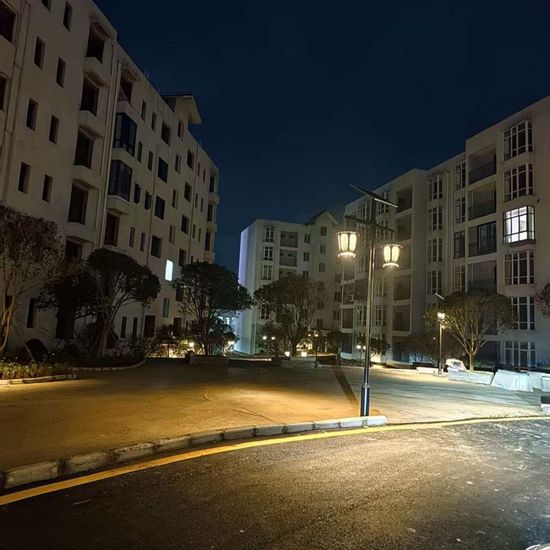
Project Based Solar Pillar Light Wholesale Solar Lighting Solution Large Quantity for Villa Garden Driveway Installations
US$4.90-7.41
5 Pieces(MOQ)

I have found results from100000+products and70000+suppliers aboutSolar based lights




The battery is the heart of a solar light. You should prioritize Lithium Iron Phosphate (LiFePO4) batteries over traditional Lead-Acid or Ni-MH types. LiFePO4 offers a longer cycle life (2000+ cycles), better thermal stability, and higher depth of discharge. Ensure the battery capacity is sufficient to provide at least 3 nights of autonomy (working time without sunlight) to account for rainy or cloudy days.
Look for Monocrystalline Silicon solar panels, which have a higher conversion efficiency (typically 17% to 22%) compared to Polycrystalline panels. Check the wattage (Wp) relative to the light's power consumption; a professional ratio is usually 3:1 or 4:1 (panel power to LED power) to ensure a full charge within 6-8 hours of standard sunlight.
For outdoor durability, the product must have an IP65 or IP67 rating to ensure protection against dust and heavy rain. For international trade, verify certifications such as CE, RoHS, and FCC. If you are importing to the US, UL or ETL listing is preferred for safety, while IK08 or higher impact protection is vital for public installations to prevent vandalism.
Focus on Luminous Efficacy (lm/W) rather than just wattage; high-quality solar lights should achieve at least 150-180 lm/W. Request an IES file to analyze the light distribution curve, ensuring it meets your specific scenario (e.g., Type II or III for roadways). Additionally, check the Color Rendering Index (CRI); a CRI >70 is standard for streets, while >80 is better for gardens and parks.
Solar lights contain batteries, which are classified as Dangerous Goods (UN3481 or UN3480). You must ensure the supplier provides a valid MSDS (Material Safety Data Sheet) and UN38.3 Test Report. Failure to provide these will lead to customs seizures or refusal by shipping lines. Always confirm if the supplier has experience in DG (Dangerous Goods) packaging to prevent fire risks during transit.
Utilize Made-in-China.com's audit services to verify the factory's production capacity. It is highly recommended to hire a third-party inspection (like SGS or Intertek) to perform a 'During Production' or 'Pre-Shipment' inspection. Specifically, request a waterproof immersion test and a battery capacity discharge test on random samples before final payment.
Negotiate based on Total Cost of Ownership (TCO) rather than just the unit price. Ask for a warranty of 3 to 5 years and insist on a 1-2% spare parts allowance (especially for controllers and remote remotes) included in the price. For large projects, negotiate staggered payment terms (e.g., 30% deposit, 70% after inspection but before shipment) to maintain leverage.
Be aware of Anti-Dumping Duties (ADD) or specific tariffs (like Section 301 in the US) that may apply to solar components. Check the HS Code (typically 9405.41) with your local customs broker to calculate the exact duty rate. Choosing a supplier on Made-in-China.com that offers DDP (Delivered Duty Paid) terms can simplify the process, but ensure all tax responsibilities are clearly defined in the contract.