
Satisfies 1 requirement
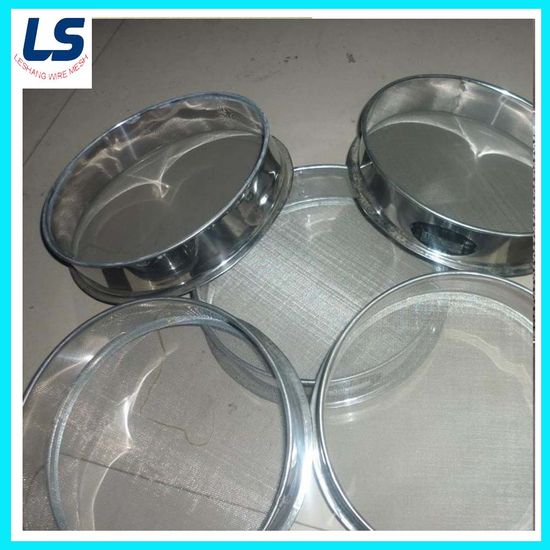
Premium Twill Weave Stainless Steel Sieve Mesh for High-Precision Industrial Filtration
US$4.50-5.50
1 Square Meter(MOQ)

I have found results from100000+products and30000+suppliers aboutSieve mesh




Selecting the correct material is critical for durability and chemical resistance. For food and pharmaceutical industries, always prioritize Stainless Steel 316 or 316L due to its superior corrosion resistance and non-reactive properties. For general construction or mining, Stainless Steel 304 or High-Tensile Carbon Steel offers a balance of strength and cost-effectiveness. If the application involves highly acidic environments, consider specialty alloys like Monel or Hastelloy.
Buyers must specify the Mesh Count (number of openings per linear inch) or the Aperture Size (the clear distance between wires). Additionally, the Wire Diameter must be balanced; thicker wires increase the service life and structural integrity but reduce the Percentage of Open Area, which can slow down throughput. Ensure the supplier provides a Micron Rating chart to match your specific particle separation requirements.
For laboratory and precision testing, the mesh must comply with ASTM E11 (U.S. standard) or ISO 3310 (International standard). These standards dictate the allowable tolerances for aperture size variations. If the product is used in food processing, ensure the supplier provides FDA compliance certificates and LFGB certification for European markets to guarantee the mesh is free from toxic contaminants.
Request a Material Test Report (MTR) or a Mill Test Certificate (MTC) to verify the chemical composition of the metal. For high-precision orders, ask for optical projection inspections or digital image analysis reports that prove the uniformity of the weave. A simple field test involves checking for weaving defects like 'shiners,' wire cross-overs, or irregular spacing, which can compromise filtration results.
The biggest risk is material substitution (e.g., receiving SS201 instead of SS304). To mitigate this, use third-party inspection services like SGS or Intertek to perform a PMI (Positive Material Identification) test before the balance payment. Another risk is oxidation during sea freight; ensure the supplier uses vacuum packaging or moisture-proof desiccant bags within wooden crates to prevent rust during long-term transit.
Focus on Total Cost of Ownership (TCO) rather than just the unit price. Negotiate for tiered pricing where the unit cost drops by 10-15% as volume increases. If you are a repeat buyer, request flexible payment terms such as Net 30 days or a lower deposit (e.g., 20% instead of 30%). Always ask if the supplier can provide customized edge treatments (like welded edges or rubber gaskets) bundled into the price to save on secondary processing costs.
For fine mesh rolls, which are susceptible to deformation, LCL (Less than Container Load) shipping in reinforced cylindrical cores and wooden boxes is mandatory. For heavy-duty vibrating screens, sea freight is the most economical. Ensure the Incoterms are clearly defined; FOB (Free On Board) is generally preferred for experienced buyers to maintain control over shipping costs and customs clearance agents.
Utilize the Secured Trading services on Made-in-China.com to protect your payment until the goods are confirmed to be shipped. Avoid transferring funds to private bank accounts; always use the official corporate account listed on the supplier's verified profile. Ensure all technical requirements, including mesh tolerance and packaging specs, are explicitly written into the Proforma Invoice (PI) to serve as legal evidence in case of disputes.