

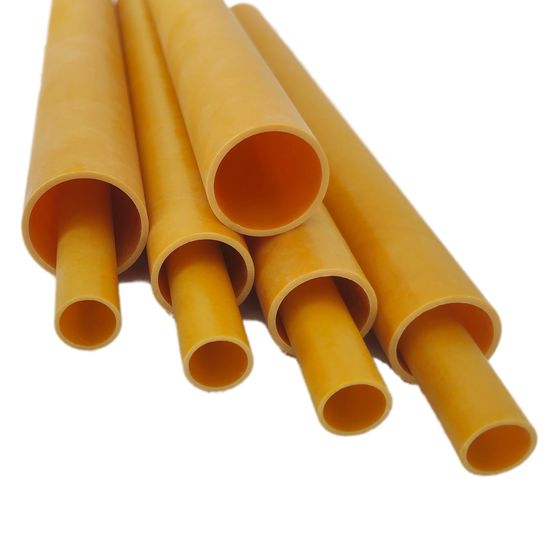
Glass fiber tube
I have found results from80000+products and30000+suppliers aboutGlass fiber tube
Commonly Used:
US$
—
Customization Available
Sample Available
Manufacturer First
Product Attributes:
Type: Polyester FRP
Type: Profiled
Type: Shaft Seal
Type: Phenolic FRP
Type: Epoxy FRP
Type: Flat
Surface Treatment: Smooth
Usage: Environmental Protection
Material: FRP
Fiber Type: GFRP
Color: Yellow
Maximum Voltage: 20KV~100KV
Thermal Rating: 200 200
Application: Automotive Harnessing
Flexibility: Flexible
Inner Diameter: 10 mm
Outer Diameter: 12 mm
Customized: Customized
Forming Way: Pultrusion
Shape: Square
Performance: Temperature
Standard: Standard
Certification: FSC
Feature: recyclable
Product Categories: FRP Pipe
Resin Transfer Molding
Fiber Characteristics: E-Glass
Diameter of Filaments: Advanced Fibers
Fiber Appearance: Continous Fiber
Glass Composition: E-Glass
Water Rubber Hose
Kind: Plastic Bar
Water Absorption: 0.2%~0.4%
Contraction Percentage: 0.4%~1.4%
Thickness: 1 mm
Polyacrylonitrile-Based Carbon Fiber
State: Filament
Mechanical Property: High-Performance Type
Surface Treatment: Finished
Surface Treatment: Offset Printing
Surface Treatment: Polished
Usage: Industral
Usage: Household
Usage: Cosmetics
Usage: Toothpaste
Usage: Food
Usage: Medicine
Usage: Chemical
Material: Polyethylene
Material: Plastic
Material: EPDM
Material: Silicone
Material: Fiberglass
Material: PTFE
Color: Black
Color: Multi-Color
Color: Color
Color: Green
Color: Single Color
Maximum Voltage: 10KV~19KV
Maximum Voltage: <10KV
Thermal Rating: B 130
Thermal Rating: F 155
Thermal Rating: 250 250
Thermal Rating: E 120
Application: Communication industry
Application: Machine Protection
Wire & Cable Protection
Application: Pumps
Electrical Power System
Application: Electronic Device
Application: Industrial Equipment
Application: Electrical Maintenance
High Voltage Testing
Home Appliance Repair
Application: Power Construction
Application: Automotive Wiring
Application: Electrical Insulation
Application: Pipe Insulation
Flexibility: Rigid
Inner Diameter: 6 mm
Outer Diameter: 10 mm
Shape: Round
Shape: O-Ring
Carbon Fiber Tube
Shape: Flat
Performance: High-Strength Type
Certification: CE
Certification: ISO
Product Categories: Tower
Water Absorption: <0.01%
Contraction Percentage: <0.4%

Satisfies 1 requirement
FRP Fibreglass Filament Pipe/Tube/ Epoxy Glass Fiber Filament Winding Tube for Battery
US$0.30-2.00
100 Meters(MOQ)

Satisfies 1 requirement
Woven Glass Fiber Heat Shrinkable Flame Retardant Cable Tube
US$0.10
1,000 Meters(MOQ)

Satisfies 1 requirement
FRP Pultruded Glass Fiber Profile Rectangular Fiberglass Square Tubes
US$2.50-2.90
1 Meter(MOQ)

Satisfies 1 requirement
High Strength Fiberglass Tube Glass Fiber Reinforced FRP GRP Pipe for Industrial Structural and Support Applications
US$1.45-1.79
100 Meters(MOQ)

Satisfies 1 requirement
Fr-4 Glass Fiber Epoxy Tube Class F Heat Resistant High Voltage Insulation Tube for Reactors and Instrument Transformers
US$6.619
30 kg(MOQ)

Satisfies 1 requirement
High-Performance Glass Fiber PTFE Tube for CNC Machining
US$2.00-3.00
5 Pieces(MOQ)

Satisfies 1 requirement
Copper Powder Glass Fiber Graphite Filled PTFE Wear-Resistant PTFE Tube
US$0.10-0.20
10 Pieces(MOQ)

Satisfies 1 requirement
FRP Tube Glass Fiber Tube, FRP Tube, Epoxy Tube, Resin Tube, Heat-Resistant Tube FRP Core, Coating Tube
US$16.00-20.00
500 Pieces(MOQ)

Satisfies 1 requirement
Corrosion-Resistant Pultrusion Profile Glass Fiber Square Tube Rectangular Tube
US$8.00-20.00
100 Meters(MOQ)

Satisfies 1 requirement
Glass Fiber FRP Reinforced Plastic Pultrusion Profile Square Tube Round Tube
US$8.00-20.00
100 Meters(MOQ)

Satisfies 1 requirement
GRP FRP Pultrusion Profile Rectangular Tube Glass Fiber Pultruded Square Pipe
US$100.00
1 Meter(MOQ)

Satisfies 1 requirement
FRP Custom Glass Fiber Cable Protection Tube Durable
US$1.00-4.00
1,000 Meters(MOQ)

Satisfies 1 requirement
Woven Glass Fiber Car Heating Pipe EPDM Exhaust Tube Water Pipe
US$1.50-2.50
50 Pieces(MOQ)

Satisfies 1 requirement
PEEK 25% glass fiber reinforced extruded hollow tube Customized size
US$135.00-150.00
1 Meter(MOQ)

Satisfies 1 requirement
Heat Proof Silicone Rubber Coated Glass Fiber Cable Protection Sleeve Fire Resistant Fiberglass Insulation Tube
US$5.49-5.60
100 Meters(MOQ)

Satisfies 1 requirement
Sunbow UL 2751 1.2kv Insulation Tube Glass Fiber Silicone Green 6.0mm VW-1
US$0.01-0.99
5,000 Meters(MOQ)


Satisfies 1 requirement
Fiberglass Composite Surface Mat Smooth Glass Fiber Square Tube
US$6.00-50.00
100 Meters(MOQ)

Satisfies 1 requirement
Protection Color Feature Temperature Glass Fiber / FRP Pipe Fiberglass Tube Resin Customized Surface Technique Epoxy RoHS
US$0.11-0.36
100 Meters(MOQ)

Satisfies 1 requirement
Smooth Grit FRP Pultruded Glass Fiber Hollow Tube Solutions
US$1.80-2.00
500 Meters(MOQ)

Satisfies 1 requirement
GRP Pultruded Profile Glass Fiber Plastic FRP Square Tube
US$0.35-0.89
1 Piece(MOQ)

Satisfies 1 requirement
Custom Size Carbon and Glass Fiber Hybrid Corrosion Resistant Composite Tube
US$0.90-99.00
10 Pieces(MOQ)

Satisfies 1 requirement
Glass Fiber Pipe FRP Epoxy Tube Coating Coring Tube Fiberglass Tube FRP Composite Pipe Epoxy Glass Fiber Wrapped Pipe Fiberglass Winding Tube
US$0.10-1.00
100 kg(MOQ)

Satisfies 1 requirement
Glass Fiber Carbon Fiber Square Tube for DIY Motorcycle Parts
US$1.00-30.00
20 Pieces(MOQ)

Satisfies 1 requirement
FRP Fibreglass Pipe/Tube/ Epoxy Glass Fiber Filament Winding Tube for Battery
US$1.00-3.00
200 kg(MOQ)

Satisfies 1 requirement
Custom High Strength FRP Glass Fiber Fiberglass Tubes
US$0.71-0.88
200 Meters(MOQ)

Satisfies 1 requirement
10mm Wall Thickness Mold PTFE Tube Bronze/Glass Fiber/Graphite/Carbon Filled PTFE Plastic Tube
US$7.20-8.80
10 kg(MOQ)

Satisfies 1 requirement
PVC Fiberglass Insulation Glass Fiber Sleeve Varnish, Wiring Insulation Sleeve, Yellow Wax Tube
US$0.02-1.50
100 Rolls(MOQ)
Sourcing guidance for Glass Fiber Tube
What are the key technical specifications to consider when selecting Glass Fiber Tubes?
Buyers must prioritize the Resin Type (Epoxy for high strength, Polyester for general use, or Vinylester for superior chemical resistance). Additionally, verify the Fiber Content (typically 60-70% for structural integrity) and the Manufacturing Process (Pultrusion for longitudinal strength vs. Filament Winding for high pressure/hoop strength). Ensure the Wall Thickness Tolerance is within ±0.05mm to ±0.1mm for precision applications.
Which international compliance standards are essential for Glass Fiber Tubes?
For construction and industrial use, ensure products meet ASTM D2996 (filament-wound pipe) or ASTM D3917 (pultruded shapes). If used in electrical insulation, IEC 60606 or UL 94-V0 flame retardancy ratings are critical. For water treatment or food-grade applications, NSF/ANSI 61 certification is mandatory to ensure no toxic leaching occurs.
How do usage scenarios dictate the choice of Glass Fiber Tube coatings?
For Outdoor/UV-exposed environments, a UV-resistant synthetic veil or polyurethane coating is necessary to prevent 'fiber blooming' and degradation. In Corrosive Chemical environments, a specialized C-glass surface veil should be used to create a resin-rich barrier. For Aesthetic or Consumer goods, specify a smooth gel-coat finish to ensure color stability and tactile comfort.
What are the performance benchmarks for high-quality Glass Fiber Tubes?
A high-performance tube should demonstrate a Tensile Strength of ≥300 MPa and a Flexural Modulus of ≥20 GPa. For electrical applications, the Dielectric Strength should exceed 10-15 kV/mm. Always request a Third-Party Lab Test Report (SGS or TUV) to verify these mechanical and thermal properties before finalizing a bulk contract.
Cross-Border Procurement & Risk Management for Glass Fiber Tubes
What are the common risks when sourcing Glass Fiber Tubes internationally?
The primary risk is Material Substitution, where suppliers use low-grade calcium carbonate fillers to reduce costs, leading to brittle tubes. Another risk is Brittle Fractures during transit due to improper bundling. To mitigate this, use Made-in-China.com's Secured Trading services and insist on Pre-shipment Inspections (PSI) to verify the weight and flexibility of the tubes.
How should I negotiate pricing and MOQs with Chinese manufacturers?
Glass fiber production is energy-intensive; therefore, negotiate based on raw material indices (glass roving and resin prices). For custom profiles, expect a Tooling/Mold Fee, but negotiate for this to be refunded once a specific volume (e.g., 5,000 meters) is reached. Standard sizes usually have lower MOQs (e.g., 100-500 meters), while custom colors or resins may require higher minimums.
What logistics and packaging precautions are necessary for long-distance shipping?
Glass fiber tubes are prone to surface scratching and end-cracking. Require the supplier to use PE film wrapping for individual tubes and reinforced plywood crates rather than simple pallets. For tubes exceeding 5.8 meters, ensure they are compatible with 40ft HQ containers to avoid expensive 'Overlength' surcharges in international shipping.
How can I ensure transaction security and quality alignment?
Always utilize Trade Terms like FOB or CIF to clearly define the transfer of risk. Use Escrow-based payment systems provided by reputable platforms like Made-in-China.com to ensure funds are only released upon confirmation of quality. Define a Quality Acceptance Agreement (QAA) that specifies the allowable percentage of surface defects (usually <1%) and the procedure for handling non-conforming goods.